Single-model disable gate: hides denied models from DSH catalogs, blocks direct dispatch with an in-protocol error chunk, and exposes a settings UI for the denylist.
Install
# from npm (prebuilt)
dsh plugin --profile web add dsh-model-gate
# from GitHub (first run asks for allowBuilds approval — follow the hint, retry)
dsh plugin --profile web add github:OPaimon/dsh-model-gate
Any plugin you install runs third-party code with your own permissions — it can read your files, use your credentials, and reach the network, and tool approvals don’t sandbox it. GitHub-sourced plugins also run build scripts at install time — pnpm blocks those until you allow them, so an install can stop with ERR_PNPM_GIT_DEP_PREPARE_NOT_ALLOWED or ERR_PNPM_IGNORED_BUILDS; dsh prints the exact key to add under allowBuilds in your profile’s pnpm-workspace.yaml, and the install works on the next run. Allowing a build is a trust decision: only install sources you trust, and pin a commit (github:owner/repo#sha).
README
English | 中文
Single-model disable gate for DSH. Deny whole provider routes or exact
provider/model pairs - denied models disappear from every discovery path and
any dispatch that still reaches them terminates with an in-protocol
MODEL_DISABLED error chunk.
Non-destructive by design: nothing in your provider configuration or credentials is touched. The denylist is an independent overlay; removing an entry (or the plugin) restores everything exactly as it was.
Screenshots
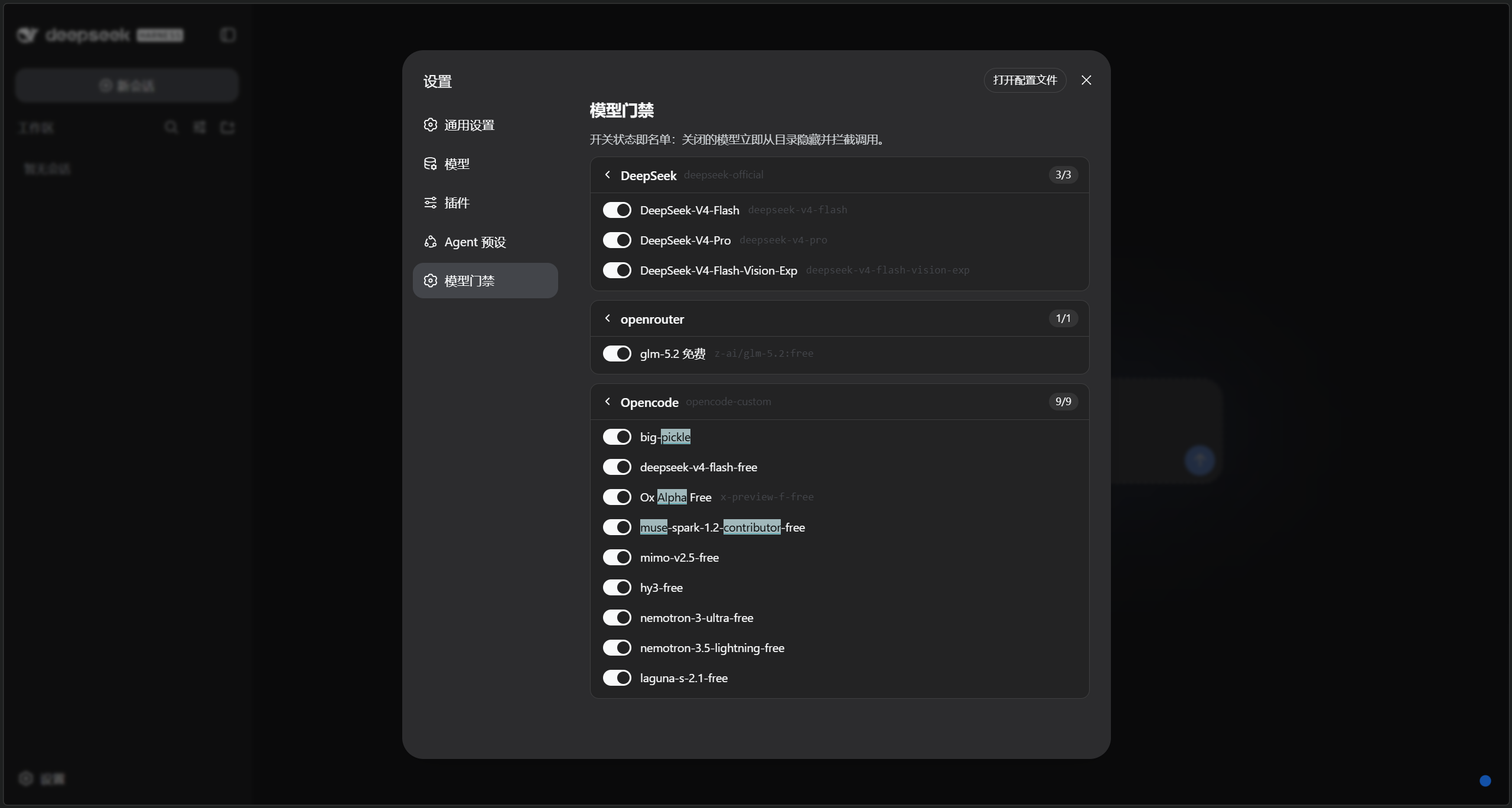
Settings panel — the「模型门禁」section reads the UNFILTERED catalog through the plugin's own typert service: one collapsible group per provider, one switch per model row, enabled-count badge on the group header.
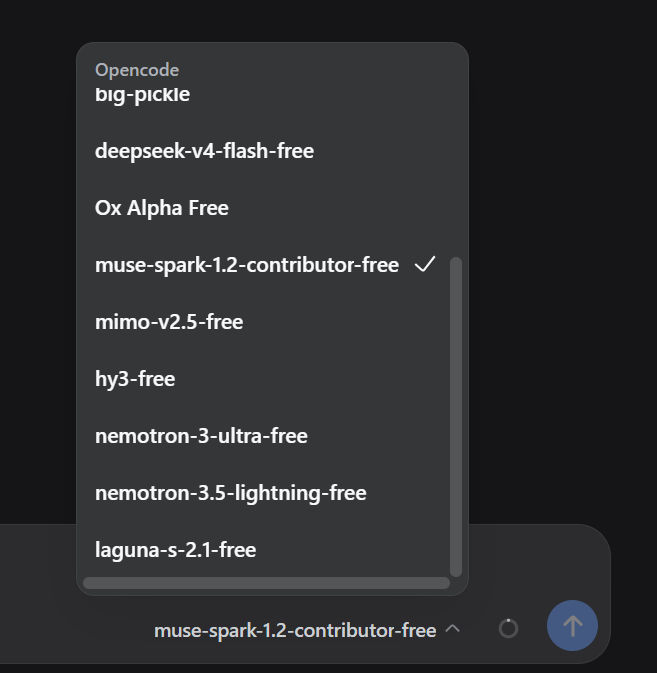
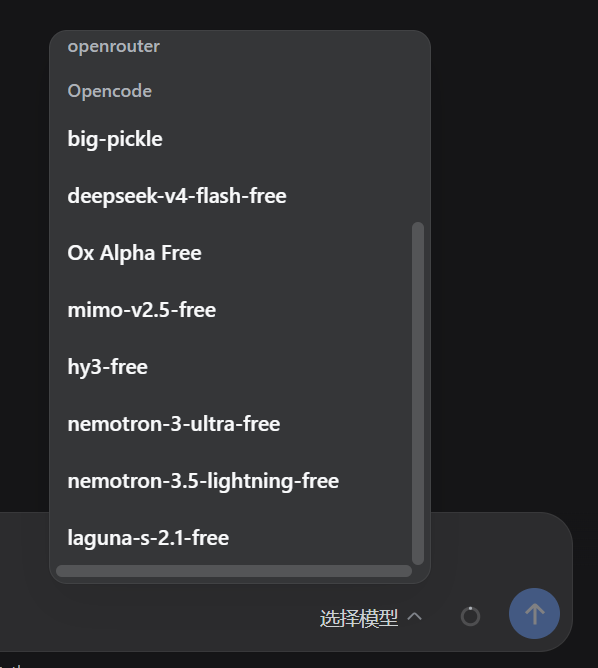
Discovery hiding — deny a model and it disappears from the web selector and every other discovery path; the current selection clears with it.
| enabled | denied |
|---|---|
 |
 |
Dispatch backstop — a turn that still reaches a denied model (subagents,
session titles, stale references) ends with the in-protocol MODEL_DISABLED
error chunk; no network request is issued.

Install
From npm - one command:
dsh plugin --profile web add dsh-model-gate
Or from a Release tarball -
download dsh-model-gate-<version>.tgz, unpack it, and point the official
installer at the unpacked directory (the tgz ships prebuilt lib/, so no build
step and no pnpm allowBuilds prompt):
tar -xzf dsh-model-gate-0.1.2.tgz    # -> ./package/
dsh plugin --profile web add ./package
Then restart DSH once so the bundle layer picks up the new entry. Every denylist edit afterwards hot-applies through settings - no further restarts. Verified against DSH 0.1.x-rc.
Usage
Edit the denylist section in ~/.dsh/settings.yaml - changes hot-apply, no
restart:
llm-model-gate:
  disabledProviders:
    - openrouter
  disabledModels:
    - "*/kimi-k2.7-code"        # deny this model id on every provider
    - "token-rhythm/glm-5"      # deny one exact provider/model pair
Matching is exact and case-sensitive. A disabled provider route hides all of
its models. Model ids listed with a * + slash prefix are denied on every
provider, including dedicated routes (e.g. DeepSeek direct) that accept
explicit directory-external ids.
Settings UI
The web settings page has a dedicated「模型门禁」section (one collapsible group per provider, one switch per model row). The panel reads the UNFILTERED catalog through the plugin's own typert service, so currently denied models render as off and can be turned back on; toggling writes the denylist through the same hot-apply settings chain as manual YAML editing.
Row-state notes:
- A row is off when its exact pair, a
*/modelstar rule, or the whole provider route denies it; the reason is tagged on the row. - Turning a star-denied row back on removes the covering star rule for every provider (the denylist has no per-provider exceptions); the panel re-renders from the returned state, so affected rows visibly flip together.
- Provider headers show an enabled-count badge; row switches are authoritative.
Semantics
- Discovery (primary): the web selector,
session.models/llm.modelscatalogs,task_models, and API request validation all read the filtered view - a disabled model behaves as if it had never been configured. Re-enable and it reappears on the next refresh. - Dispatch (backstop): any path that still dispatches a denied model -
subagents, session-title, custom routing, explicit ids - is stopped at the
public
llm/streamwaterfall with a single terminalfinish{kind:"error", code:"MODEL_DISABLED"}chunk. The turn ends with a normal model error; no network request is issued. - If the disabled model is the current session or default model, the next
request on it fails; nothing switches automatically. Failover-style plugins
listening on
agent/request-errorcompose naturally.
Boundaries
- Vision-router clones are separate route keys: disabling
openrouterdoes not disableopenrouter-vision- list both if you want both. - Providers stay installed; only their public listing is filtered. Provider configuration surfaces (adding/editing providers) are unaffected.
- Bypassing the DSH LLM service entirely (direct HTTP) is outside DSH.
- Uninstalling removes the bundle entry; the plugin restores the native
listProviders/listModelsmethods on unload with zero residue. A leftover denylist section insettings.yamlis harmless.
License
MIT. An independently distributed plugin: DSH itself is untouched and keeps its own license.
Development
bash scripts/build.sh     # requires DSH_CHECKOUT or ~/dsh-harness; also shims node_modules/.bin/tsdown
npm run build:client      # bundle src/client/main.tsx -> lib/client.js (ModuleLoader wrapper)
npm test                  # unit tests (node:test) against lib/ - run the build first on a fresh clone
Tests import the compiled lib/ outputs (relative ESM imports in source need
tsc's .js rewriting, which node's type stripping does not perform), which
resolves the host packages through the symlinks that scripts/build.sh
creates - run the build first on a fresh clone.
Inside a super-injector environment: dev_inject_plugin <this dir> then
dev_reload_package to iterate without restarting.
Links
More in this category
V1ki/dsh-plugin-subscriptions★ 432
Use ChatGPT (Codex), Claude, and Grok subscriptions as DeepSeek Harness LLM providers, with Settings login, model catalogs, usage, plus image_generate, video_generate, and x_search tools.
Mars-Sea/dsh-commandcode-provider★ 370
Unofficial Command Code LLM provider: registers a `commandcode` route with a live model catalog and reasoning-effort support.
corrinehu/dsh-workbuddy-connect★ 338
Brings the models in the WorkBuddy desktop app straight into DeepSeek Harness — zero configuration in the DSH chat.
cv-superding/dsh-deepseek-web-login★ 238
Adds a deepseek-web provider that uses chat.deepseek.com web models in DSH, with browser login capture, PoW request signing, SSE streaming, and prompting-based tool calls.
FishBottle7/opencode2dsh★ 153
Exposes OpenCode Zen free models to DeepSeek Harness, with no API key.
WSL043/dsh-codex-subscription★ 149
ChatGPT OAuth provider for Codex models with subscription web search, quota and safe reset, image tools, Fast mode, and model-aware context; no API key or Codex CLI.
Community comments
Comments are public GitHub Discussions. Loading them connects to GitHub and Giscus; a GitHub account is required to post.