Realtime WebGPU ocean skin with quick controls for waves, daylight, glass opacity, and an automatic day cycle.
Install
# from npm (prebuilt)
dsh plugin --profile web add open-sea-skin
# from a prebuilt release tarball
dsh plugin --profile web add "https://github.com/d-dev0101/open-sea-skin/releases/latest/download/open-sea-skin.tgz"
# from GitHub (first run asks for allowBuilds approval — follow the hint, retry)
dsh plugin --profile web add github:d-dev0101/open-sea-skin
Any plugin you install runs third-party code with your own permissions — it can read your files, use your credentials, and reach the network, and tool approvals don’t sandbox it. GitHub-sourced plugins also run build scripts at install time — pnpm blocks those until you allow them, so an install can stop with ERR_PNPM_GIT_DEP_PREPARE_NOT_ALLOWED or ERR_PNPM_IGNORED_BUILDS; dsh prints the exact key to add under allowBuilds in your profile’s pnpm-workspace.yaml, and the install works on the next run. Allowing a build is a trust decision: only install sources you trust, and pin a commit (github:owner/repo#sha).
README
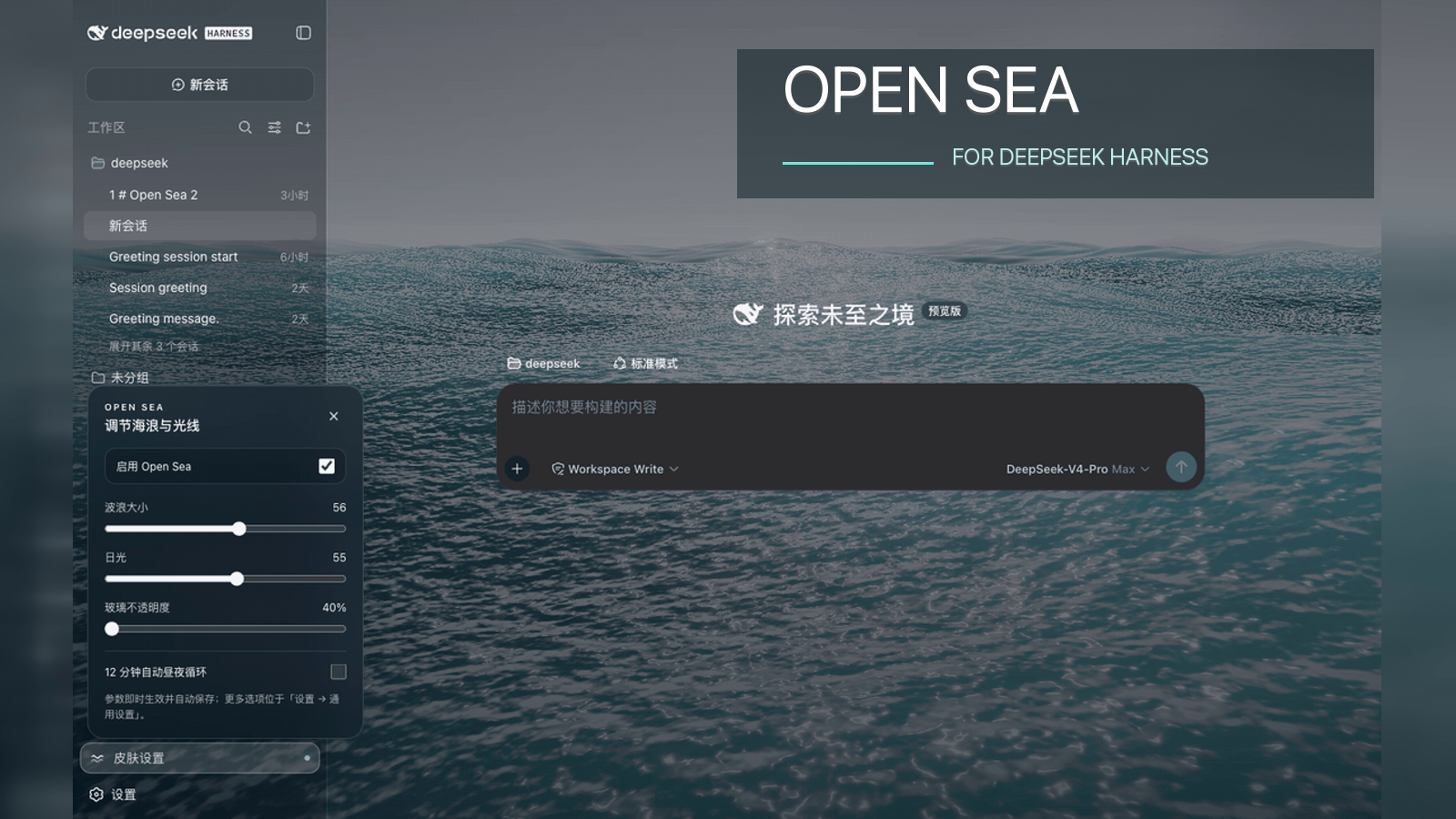
Open Sea Skin is an open-source ocean theme and appearance plugin for DeepSeek Harness (DSH). It adds a real-time WebGPU animated background, adjustable waves, daylight-to-sunset lighting, and a translucent glass interface. Use it as a DSH plugin, a Harness-only Chrome/Edge extension, or a static frontend integration.
Community-made, not an official DeepSeek product. This skin targets DeepSeek Harness, not the DeepSeek chat website. It is unrelated to the OpenSea NFT marketplace.
✨ Your workspace, your sea
| Feature | What you can do |
|---|---|
| 🌊 Real-time ocean | Watch animated waves and reflections, rather than a looping wallpaper video. |
| 🌅 Daylight & sunset | Set your own light or enable the twelve-minute day/night cycle. |
| 🫧 Transparent interface | Adjust glass opacity from 40% to 90% in light or dark Harness layouts. |
| 🎛️ Quick controls | Change sea state, sunlight and opacity from the lower-left skin settings panel. |
| 🏠 Your homepage stays yours | The extension does not replace new tabs or change your browser homepage. |
| 🔒 Local assets | Ocean scripts, three.js and fonts ship with the skin; no skin analytics or runtime CDN requests. |
| ⌨️ Thoughtful controls | Chinese/English UI, keyboard navigation, Escape to close, and reduced-motion support. |
🎬 Open Sea inside DeepSeek Harness
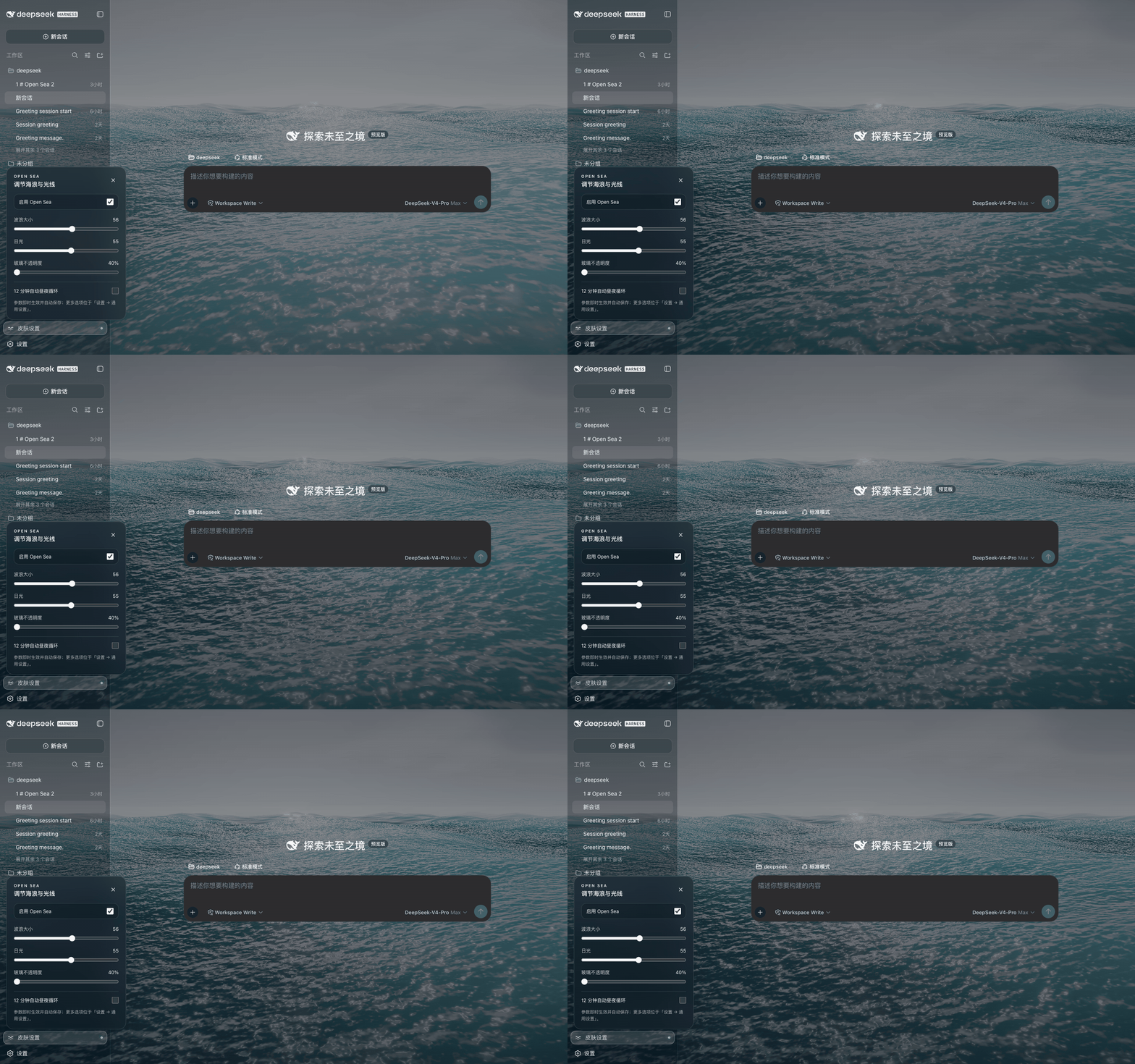
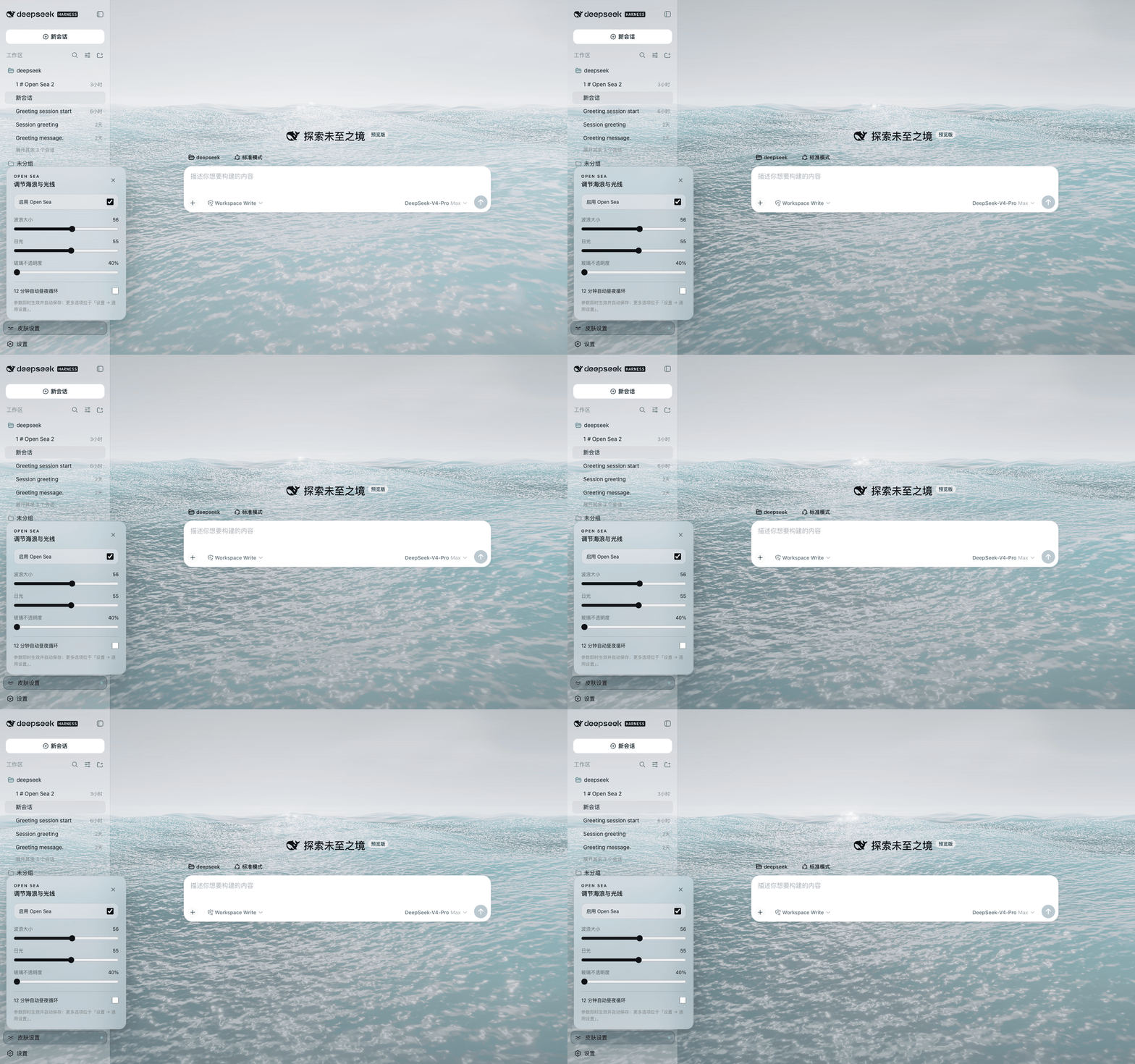
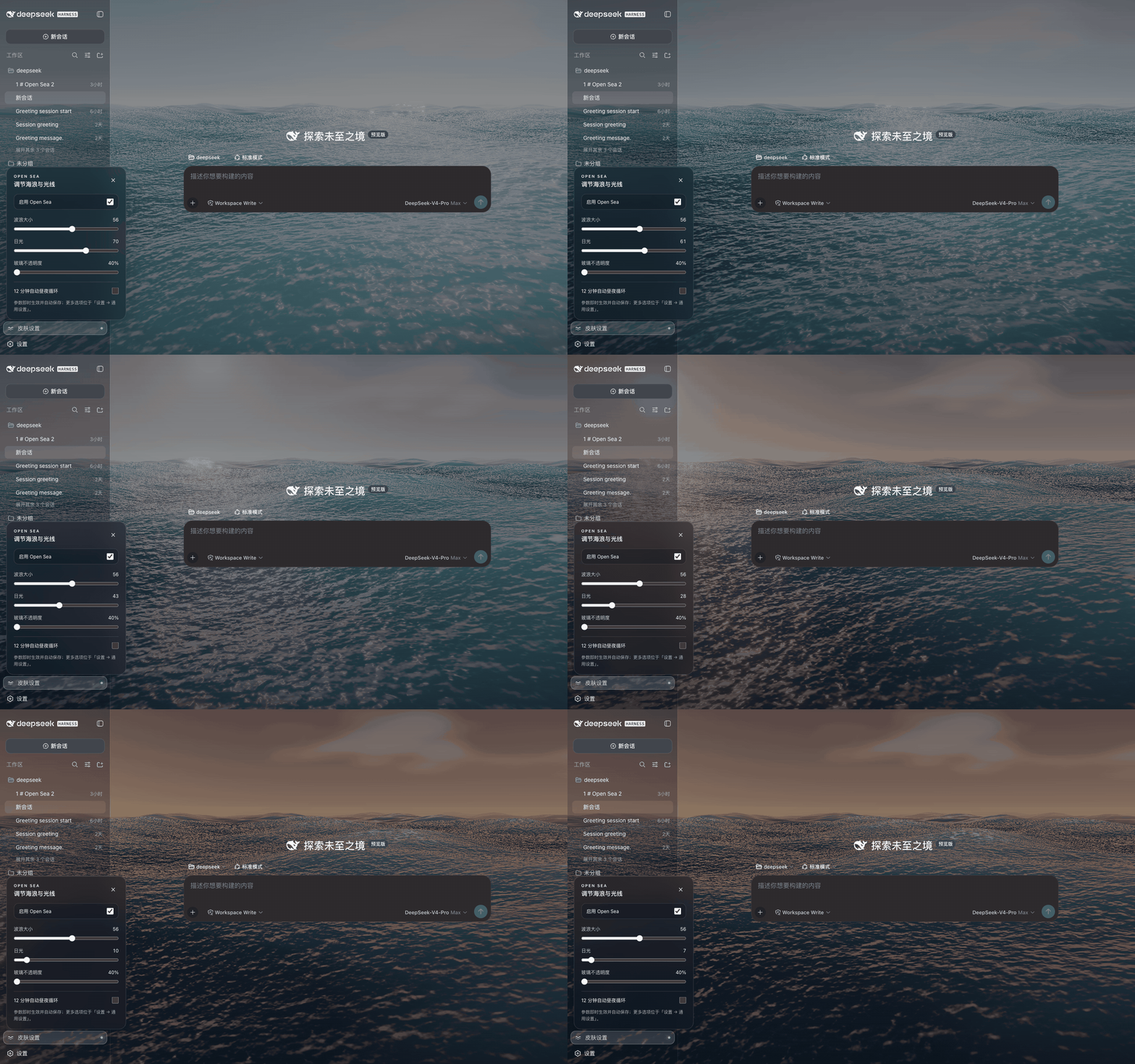
These recordings show the native Harness integration at 40% glass opacity. Overview settings: wave size 56, daylight Afternoon (55). The interactive website lets you try the controls before installing.
🌙 Dark mode · an ocean behind your conversation
☀️ Light mode · a brighter workspace
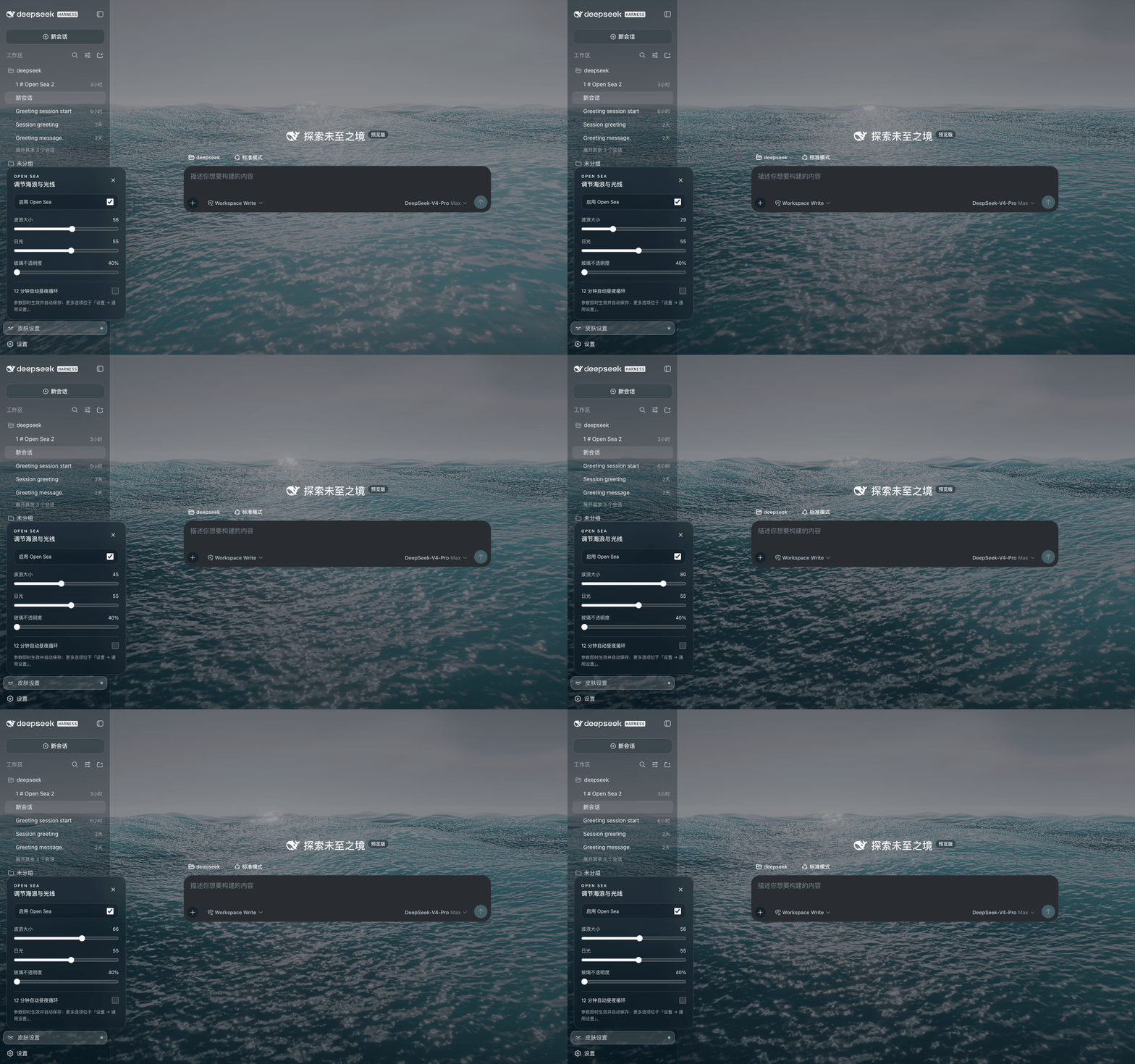
🌊 Wave control · calm water to high sea
Daylight stays at Afternoon while wave size changes, then returns to 56.
🌅 Sunlight control · midday to sunset
Wave size stays at 56 while the light moves from Midday to Dusk.
📦 Choose your installation
Choose one method. Installing several at once makes updates and troubleshooting harder.
| Your setup | Best starting point |
|---|---|
| Harness Web / DSH plugin installer | DSH plugin |
| Local Harness in Chrome or Edge | Browser extension |
| Built frontend without plugin support | Static installer |
| Developing a Harness source integration | Native integration guide |
1. DSH plugin
Release status, checked September 12, 2026: GitHub v1.2.4 is available; npm is still 1.2.3. The language-sync fix is in v1.2.4. Do not use open-sea-skin@1.2.4 until it appears on npm.
Install the prebuilt npm version without a Git download or install-time build:
dsh plugin --profile web add open-sea-skin@1.2.3
For the v1.2.4 language fix, install the published GitHub tag:
dsh plugin --profile web add 'github:d-dev0101/open-sea-skin#v1.2.4'
Restart Harness, reload its page, then open Skin settings at the lower left. In DSH Desktop, use the managed plugin installer and restart from Desktop settings; available update versions depend on the catalog and installation source.
Installation & troubleshooting →
2. Chrome / Edge extension
- Download the extension ZIP and unzip it.
- Open
chrome://extensionsoredge://extensions; enable Developer mode. - Choose Load unpacked and select the extracted folder containing
manifest.json. If you cloned the repository, chooseextension/. - Open your Harness page on
127.0.0.1orlocalhostand reload it.
No new-tab takeover. The extension verifies the Harness page before injecting the ocean; other local development pages and existing homepage extensions remain untouched.
3. Static frontend installer
For a built Harness frontend that cannot use the plugin. Stop Harness first. Inspect the script, then run from any directory:
curl -fsSL https://raw.githubusercontent.com/d-dev0101/open-sea-skin/main/install.sh | bash
Start dsh web again and keep it running. After a Harness frontend upgrade, rerun the command with bash -s -- --update. This method changes frontend files; it does not start the server.
Explicit frontend paths, backups & recovery →
💡 Before you install
No. The extension targets a verified local DeepSeek Harness page. It does not replace your browser homepage or skin chat.deepseek.com.
Turn off the skin in the quick-controls panel to keep it installed without the ocean. To remove a DSH plugin:
dsh plugin --profile web remove open-sea-skin
Restart Harness. Remove the browser extension through the browser's extensions page. For a static installation, stop Harness and run:
curl -fsSL https://raw.githubusercontent.com/d-dev0101/open-sea-skin/main/install.sh | bash -s -- --uninstall
Then restart Harness. The static installer removes its own marked loader/assets, not your sessions. See the recovery guide if a page fails to load.
No blanket compatibility claim. Native source integration was verified against Harness 0.1.2-alpha.3, commit dd6322d60 (August 31, 2026). Desktop regression tests use a Chromium shell fixture based on DSH Desktop Beta 2.0.5-beta.1, covering 24 layout/material/theme/opacity combinations—not a full native desktop end-to-end test.
If an update breaks the skin, report your Harness version, installation method and a redacted screenshot/log.
The renderer uses adaptive resolution, hidden-tab pause and reduced-motion handling. Animated 3D rendering still uses GPU resources; try the demo on your device first.
The skin does not collect or transmit chat data. Extension permissions are limited to storage and the local Harness hosts. This statement describes Open Sea, not the host application's own behavior. Privacy & permissions →
🛠️ Built for an open ecosystem
The renderer uses WebGPU, three.js and TSL, with five Gerstner waves, reflections, foam and sky lighting. The canonical runtime lives in shared/; generated plugin, extension and static-loader copies stay synchronized. site/ preserves the original showcase.
With Node.js 20+:
npm ci
npm run build
npm run check
npx playwright install chromium
npm run test:browser
npm run test:desktop
npm run test:website
| Resource | Purpose |
|---|---|
| Architecture | Renderer, shared controller and installation adapters |
| Native source integration | Harness settings/slots integration and pinned compatibility |
| Release guide | Packaging and publishing |
| Changelog | Fixes and version history |
| Contributing through Issues / PRs | Bug reports, ideas and improvements |
| DSH plugin topic | Explore the wider community ecosystem |
🤝 Community & license
Made for people who want a more personal DeepSeek Harness workspace. Feedback, bug reports and contributions are welcome. Please never post passwords, tokens or private conversations in an Issue.
Project code is MIT licensed. third-party code and fonts retain their own licenses; see Third-party notices.
Links
More in this category
Small-tailqwq/dsh-deep-whale#maid-atelier★ 2327
Whale-girl skin series for the DSH Web UI (maid-atelier).
elysia395/dsh-wallpaper-engine★ 426
Requires DeepSeek Harness 0.1.5-rc.1+ (DSH Desktop >= 2.0.7) and dsh-better-sidebar >= 0.19.0 - update both before installing or updating this plugin. Plays local Wallpaper Engine Video/Web wallpapers behind the chat, renders Scene wallpapers as extracted static frames, and adds content-rating/type filters, custom uploads and an iOS-style liquid-glass settings window.
kingOfSoySauce/dsh-liang-skin★ 229
Adaptive reasoning slider skin that maps each model's available reasoning efforts onto a 0–30 visual intensity scale, with synchronized portraits, background, and interface colors.
RevolutionLA/dsh-dream-skin★ 197
One-command skin plugin: 8 original themes, translucent wallpaper with opacity/blur, per-user accent, and shareable theme-pack import/export, favorites and surprise-me — purely native on DSH's token system.
GGBond2424648901/deep-whale-day-night-theme★ 117
Non-commercial day/night whale-girl skin for official Harness rc.7: current no-viewport-frame layout, paired crystal-workshop and moon-tide scenes, chibi companions, translucent ornaments, and lightweight ambience.
ymh0000123/dsh-theme-endfield★ 109
Arknights: Endfield industrial-editorial theme for the DSH Web UI: cream paper, ink text, zero border radius, two switchable accent palettes (signal yellow / teal-cyan), plus optional marching-squares contour background, ENDFIELD watermark and boot progress plate.
Community comments
Comments are public GitHub Discussions. Loading them connects to GitHub and Giscus; a GitHub account is required to post.